Employer Branding Program

Build a credible employer brand through your people. This program helps organisations strengthen their employer brand by activating employees as authentic ambassadors on social media. Instead of relying on campaigns or vacancies alone, it focuses on real people sharing real stories in a consistent and structured way.

Using Apostle and the Social Reach Optimization approach, the program supports a scalable employer branding strategy that drives recruitment, retention and long-term visibility.
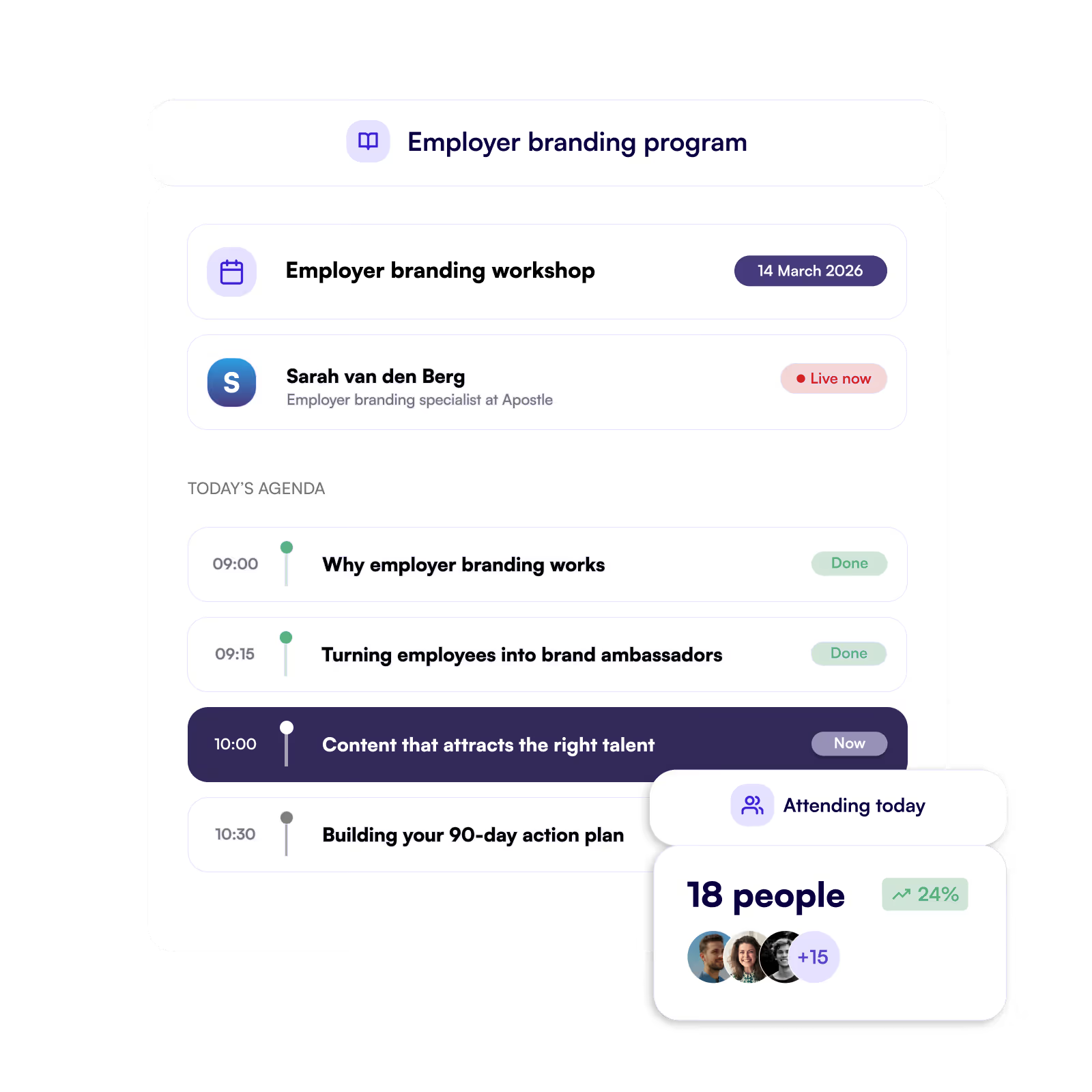
Agenda of employer branding workshop
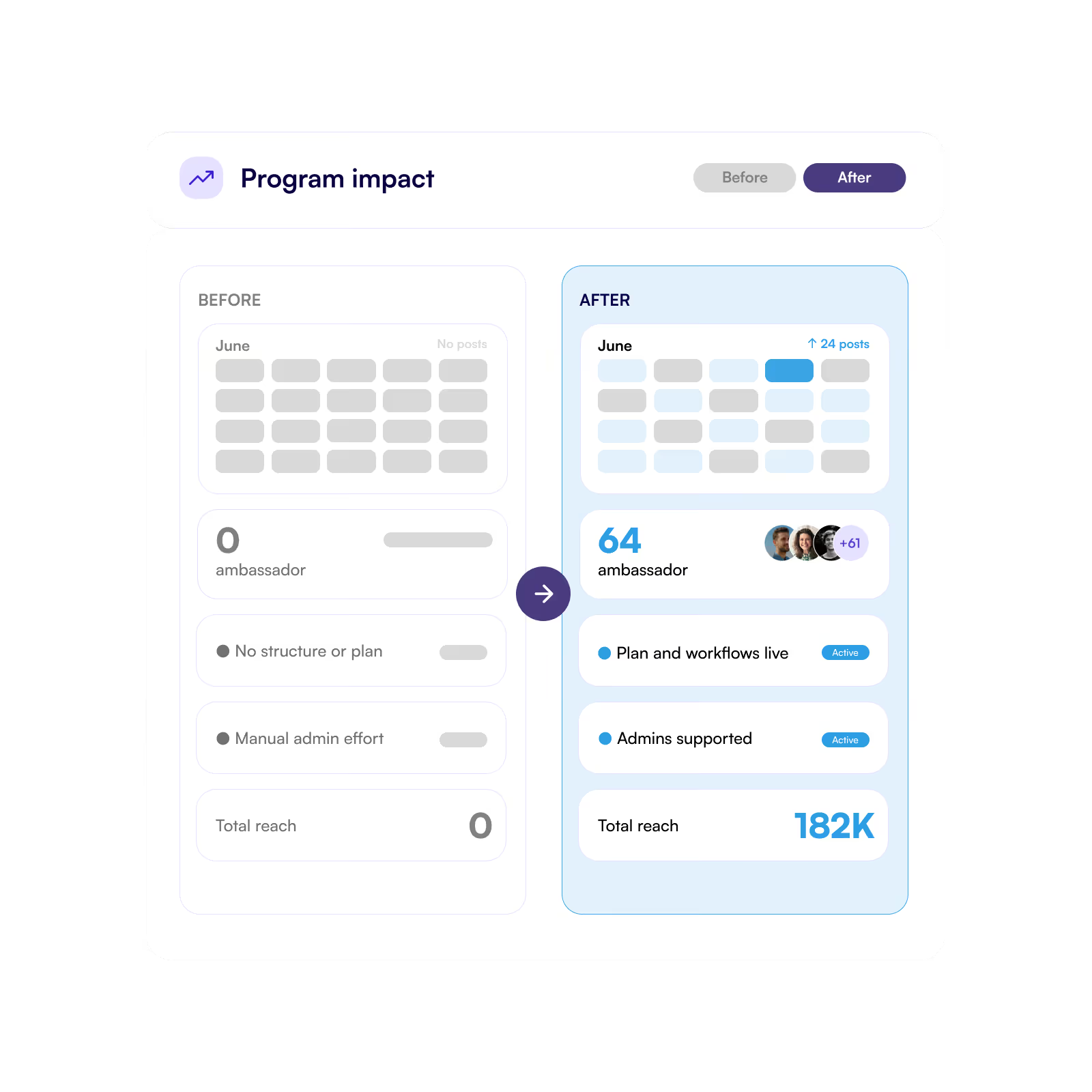
Before and after with program impact

The program goals.

The employer branding program is designed to:

  • Increase employer brand visibility through employees.
  • Support recruitment with credible, people-led stories.
  • Enable real people to share authentic stories, beyond campaigns and vacancies.
  • Align HR, recruitment and marketing around one approach.
  • Make employer branding part of everyday behaviour.
  • Build a sustainable foundation for long-term talent attraction.

What your organization gets.

We provide structure, guidance and behavioural activation.
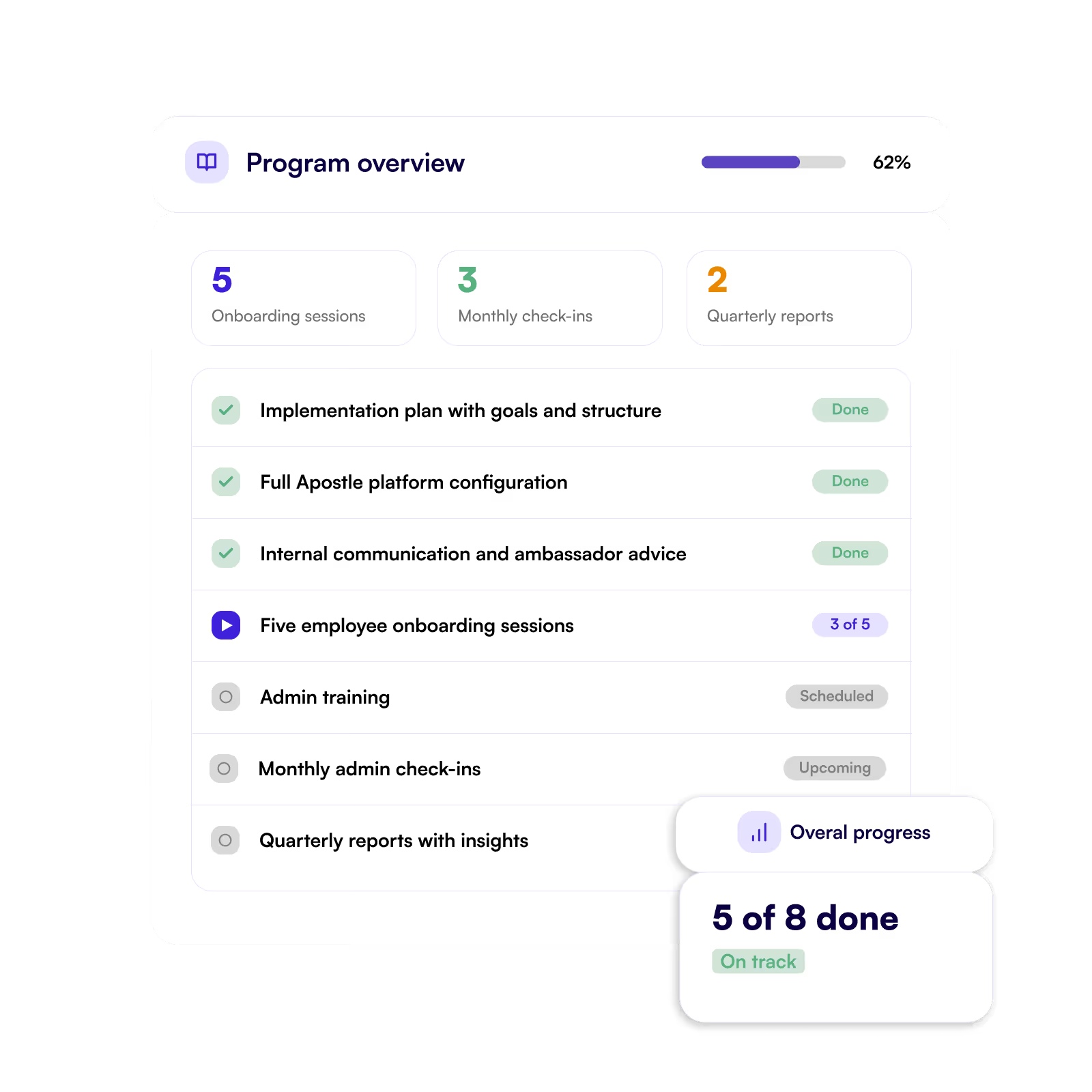
  • Strategic employer branding implementation plan.
  • Employer posts framework (themes, storylines, tone of voice).
  • Advice on internal communication and ambassador recruitment.
  • Five onboarding and kick-off trainings for employees.
  • One dedicated training for recruiters and admins.
  • Monthly check-ins with recruitment-focused insights.
  • Two quarterly reports with reach, engagement and employer branding impact
  • Access to e-learning for admins and social creators.
Program overview with progress and steps

The approach and timeline of the program.

The employer branding program typically runs for 6 months. The exact setup depends on team size and organisational goals.

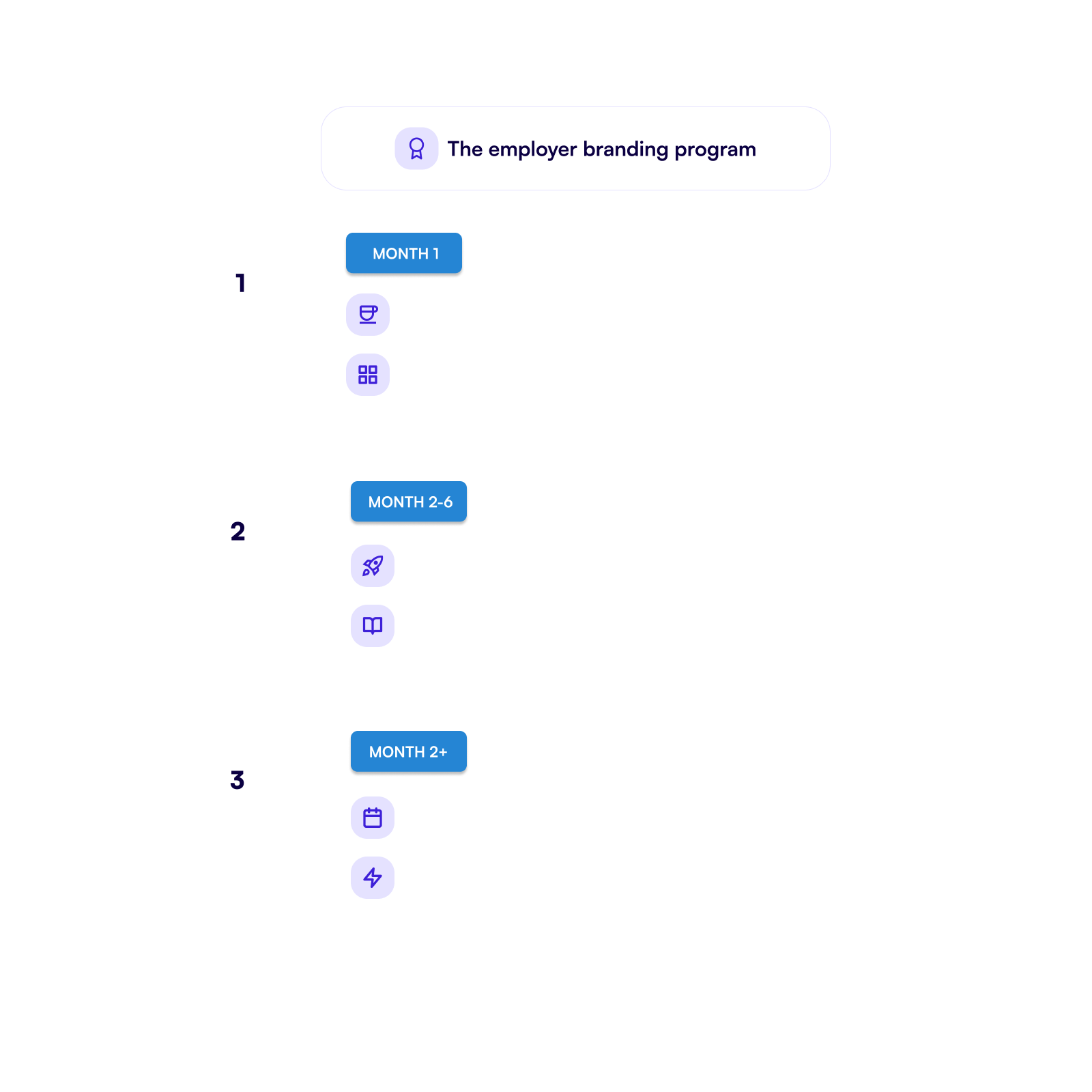
month 1

Phase 1. Employer branding strategy

We start by aligning employer branding with real employee stories.

Plan and structure
  • Intake with HR, recruitment and marketing.
  • Define employer branding goals and target audiences.
  • Translate EVP into practical content themes.
  • Select storylines employees can realistically share.
  • Configure groups, roles and flows in Apostle.
  • Select an initial group of employer brand ambassadors.
  • Advice on internal communication and invitations.
month 2 - 6

Phase 2. Onboarding

Adoption is key. We focus on clarity, repetition and relevance.

Ready to share
  • Five onboarding and kick-off sessions for employees.
  • Why employee-driven employer branding works.
  • What employees gain personally and how to use Apostle.
  • Creating and sharing posts that feel authentic.
  • Clear agreements on frequency and expectations.
  • One additional training for recruiters and admins.
  • Access to e-learning for deeper understanding.
From month 2

Phase 3. Keep employer branding active

Employer branding only works when it stays visible.
Clear insights
  • Monthly check-ins with admins and recruiters.
  • Analysis of activity, reach and engagement.
  • Advice on improving participation and relevance.
  • Support for monthly and quarterly reporting.
  • Guidance on editorial planning between HR, recruitment and marketing.
  • Activation tactics: ambassador spotlights, vacancy-linked storytelling, feedback loops.
  • Optional: deep-dive workshops via partners (not included).
Program overview with 3 phases

Final evaluation and the next steps.

At the end of the program, we define how to scale.

  • Evaluation of adoption, reach and engagement.
  • Review of employer branding impact on recruitment.
  • Identification of strong ambassadors and story formats.
  • Advice on expansion to other teams or regions.
  • Roadmap for continued employer branding activation.

The employer branding program is for organisations that want to move beyond employer branding campaigns.

Not sure where to start? Don't worry!

We’ll help you choose the right approach and program for your organisation.

$(document).ready(function() { // Only execute if the URL contains the Dutch slug '/nl' // if(window.location.href.indexOf('/nl') > -1) { // Check if the URL does not contain the word 'webinars' if(window.location.href.indexOf('webinars') === -1) { const modal = $('#webinar-modal'); function webModal(){ hasSeenBanner = getCookie("hasSeenWebinarBanner"); if (hasSeenBanner == "") { modal.addClass('active'); } } function closeModal(){ setCookie('hasSeenWebinarBanner', '1', '20'); modal.removeClass('active'); } $('#close-webinar-modal').click(function() { closeModal(); }); setTimeout(() => { webModal(); }, 15000); // Below you find three function for setting a cookie, getting a cookie and eventually checking whether the cookie exists function setCookie(cname, cvalue, exdays) { const d = new Date(); d.setTime(d.getTime() + (exdays*24*60*60*1000)); let expires = "expires="+ d.toUTCString(); document.cookie = cname + "=" + cvalue + ";" + expires + ";path=/"; } function getCookie(cname) { let name = cname + "="; let decodedCookie = decodeURIComponent(document.cookie); let ca = decodedCookie.split(';'); for(let i = 0; i #webinar-modal.active { z-index: 1000; opacity: 1; } #modal-wrapper { transition-property: opacity, z-index; transition-duration: 200ms, 0; transition-delay: 0, 200ms; } .geek-frame-holder { margin: 0 auto; }