How Social Reach Optimization Works

From behaviour design to always-on advocacy. Social Reach Optimization (SRO) is our approach to building sustainable brand visibility through people. Not by asking for motivation upfront, but by designing behaviour step by step.

Employee advocacy only works when people actually participate. SRO is built to make that happen.
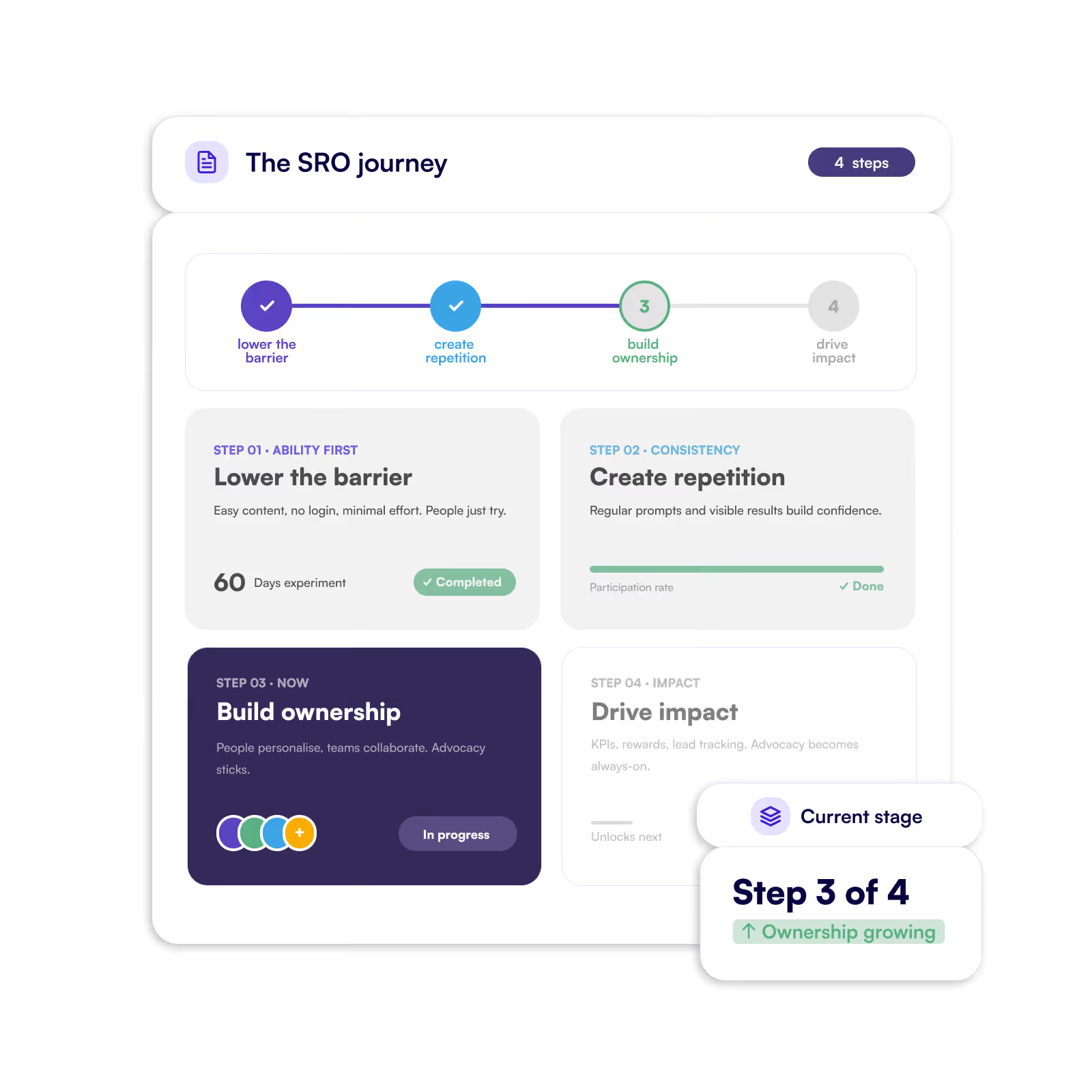
A dashboard showing the 4 steps of SRO.
Essentials

The Easiest Way To Start With Employee Advocacy

Essentials is designed for organisations that want to activate employees on social media with minimal friction. No new tools. No logins. No complex onboarding. It is the fastest way to test participation, build confidence internally and create consistent brand visibility through people.

A dashboard showing participation going down without SRO.

Why employee advocacy often fails.

Most organisations don’t fail because of lack of intent. They fail because behaviour is hard to change. People are asked to:

  • Post regularly.
  • Represent the brand.
  • Think about content.
  • Use new tools.

Without structure, this creates friction. Motivation drops. Participation fades. SRO solves this by applying proven behaviour change principles.

what actually works

Behavior before motivation.

Behavior doesn’t happen because people want to. It happens when it’s easy, timed right and supported.

SRO is inspired by the Fogg Behavior Model, which states that behaviour only occurs when Motivation, Ability and a Prompt come together.

Instead of expecting all three at once, SRO builds them in the right order. Design behaviour first. Motivation follows.

The fogg behavior model

The SRO journey in 4 behaviour steps.

Ability first.

Step 1. Lower the barrier

Every SRO journey starts with a 60-day experiment. The goal is not performance, but participation.

During the experiment:

  • Content is prepared in advance.
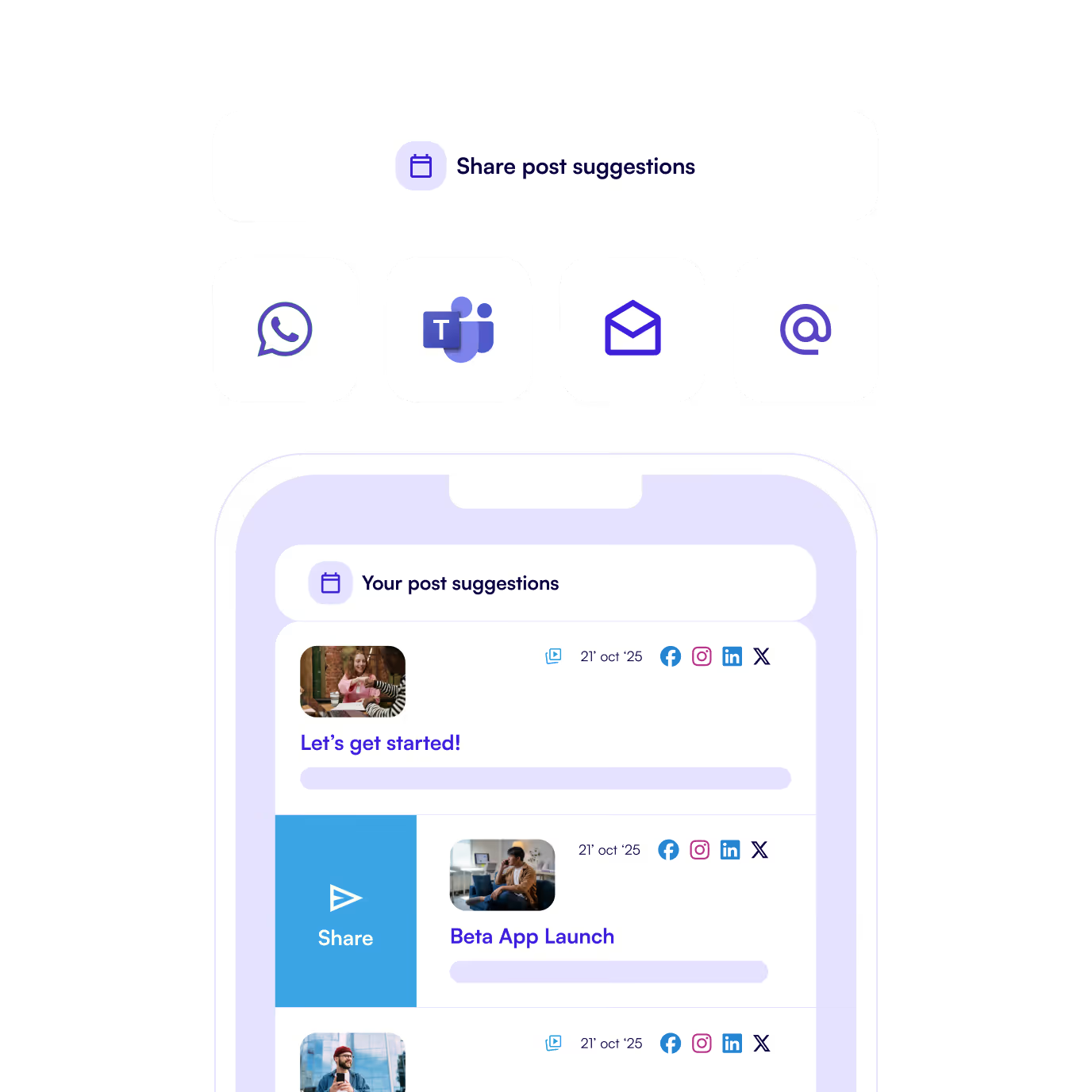
  • Posts are delivered via email, mobile app or WhatsApp.
  • No logins are required.
  • The effort is minimal.

People don’t need motivation yet. They just need it to be easy.

Start the 60-day experiment →

Consistency

Step 2. Create repetition

After the experiment, organisations choose a first license.

This introduces:

  • A clear content rhythm.
  • Regular prompts.
  • Visible results in reach and engagement.

People recognise the pattern. They see results and confidence grows.

Motivation follows success, not the other way around.

Participation

Step 3. Build ownership

As adoption grows, organisations move into collaboration.

This is where behaviour really sticks:

  • People personalise the content.
  • Teams start to collaborate.
  • Post ideas come from employees themselves.
  • Social proof and norms emerge.

Advocacy becomes something people own, not something they are asked to do.

Performance

Step 4. Drive impact

In mature organisations, advocacy becomes part of how the organisation works.

With KPIs, rewards, lead tracking and governance:

  • Behaviour and impact is measurable.
  • Results are optimized and continuously improving.
  • Employee advocacy supports real business goals.

This is where advocacy becomes truly always-on.

From ad hoc to performance driven.

SRO is not just a technical roadmap. It is a behavioural maturity model.
Each phase reflects a higher level of behavioural maturity.

1
A 60-day experiment

Always start with an experiment. Lower the barrier and prove participation before committing.

2
Pick the right plan

After the experiment you choose how far you want to scale, once value is proven.

3
Setups are included

Licenses include the setup your organisation needs. From teams and workflows to integrations.

4
Programs for adoption

Software enables scale. Programs make it stick.

1
Ad hoc activity

High effort, low consistency. Behaviour depends on individuals.

2
Basic publishing

Routine replaces randomness. Consistency creates confidence.

3
Experimentation

Credibility grows through people. Advocacy becomes authentic.

4
Collaborate

Ownership creates scale. Teams activate themselves within guardrails.

5
Performance driven

Behaviour drives results. Advocacy is measurable and optimised.
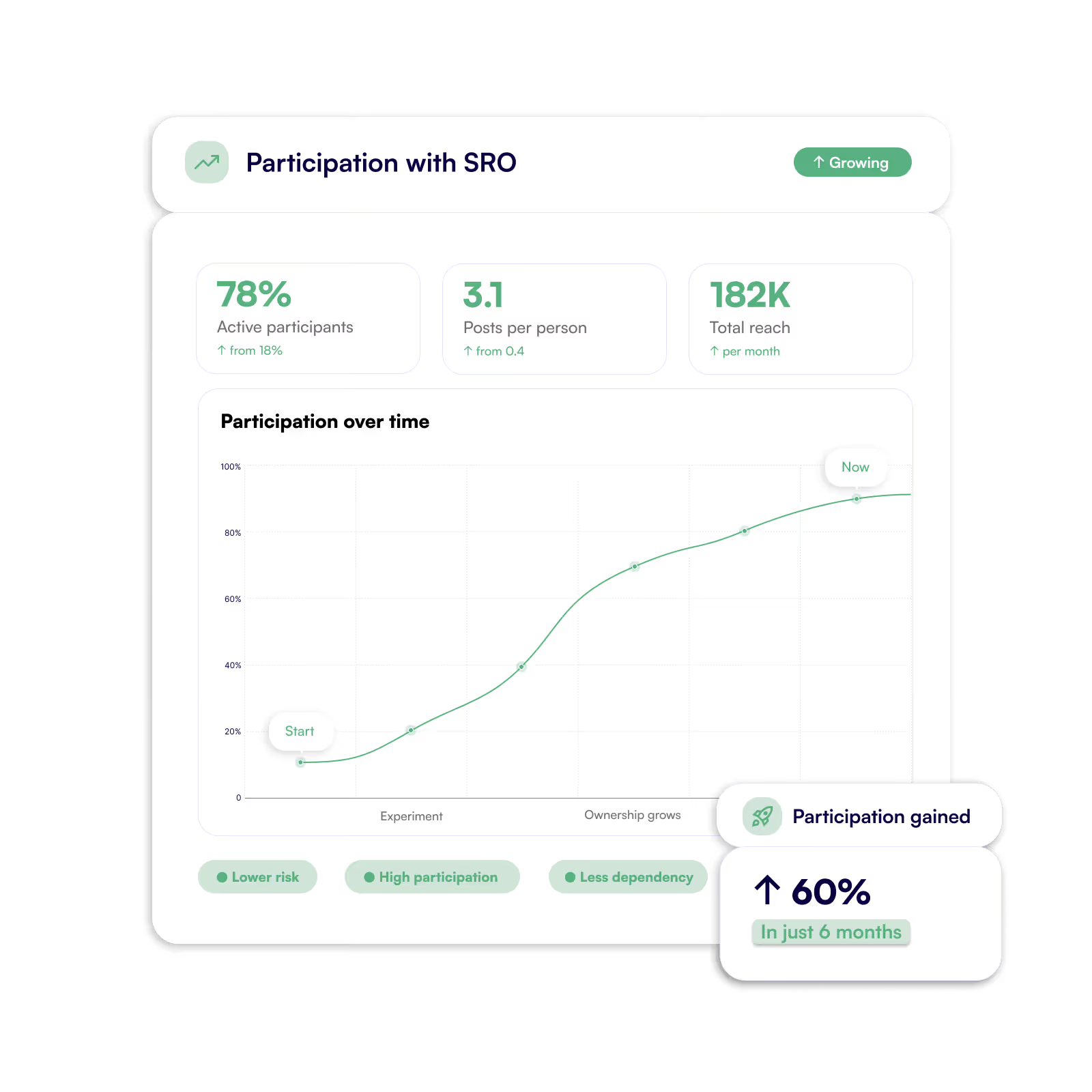
A dashboard showing participation growing over time with SRO

Why this approach works and what it means for you.

SRO works because it meets people where they are — removing friction before raising expectations, and aligning prompts and behaviour with the way people actually work. The outcomes speak for themselves:

  • Lower risk at the start.
  • Higher participation over time.
  • Less dependency on individuals.
  • Predictable, sustainable advocacy.

Organisations can start small without demanding motivation upfront, and grow steadily without losing adoption. All behaviour-driven — which is exactly why it lasts.

Are you ready to get started? Don't wait!

$(document).ready(function() { // Only execute if the URL contains the Dutch slug '/nl' // if(window.location.href.indexOf('/nl') > -1) { // Check if the URL does not contain the word 'webinars' if(window.location.href.indexOf('webinars') === -1) { const modal = $('#webinar-modal'); function webModal(){ hasSeenBanner = getCookie("hasSeenWebinarBanner"); if (hasSeenBanner == "") { modal.addClass('active'); } } function closeModal(){ setCookie('hasSeenWebinarBanner', '1', '20'); modal.removeClass('active'); } $('#close-webinar-modal').click(function() { closeModal(); }); setTimeout(() => { webModal(); }, 15000); // Below you find three function for setting a cookie, getting a cookie and eventually checking whether the cookie exists function setCookie(cname, cvalue, exdays) { const d = new Date(); d.setTime(d.getTime() + (exdays*24*60*60*1000)); let expires = "expires="+ d.toUTCString(); document.cookie = cname + "=" + cvalue + ";" + expires + ";path=/"; } function getCookie(cname) { let name = cname + "="; let decodedCookie = decodeURIComponent(document.cookie); let ca = decodedCookie.split(';'); for(let i = 0; i #webinar-modal.active { z-index: 1000; opacity: 1; } #modal-wrapper { transition-property: opacity, z-index; transition-duration: 200ms, 0; transition-delay: 0, 200ms; } .geek-frame-holder { margin: 0 auto; }