Collaborative workflows

Work Together on Content Without Losing Time or Control

Coordinate drafts, expert reviews and approvals in one structured workflow. Assign roles, involve the right stakeholders and move content from creation to activation without slowing execution.
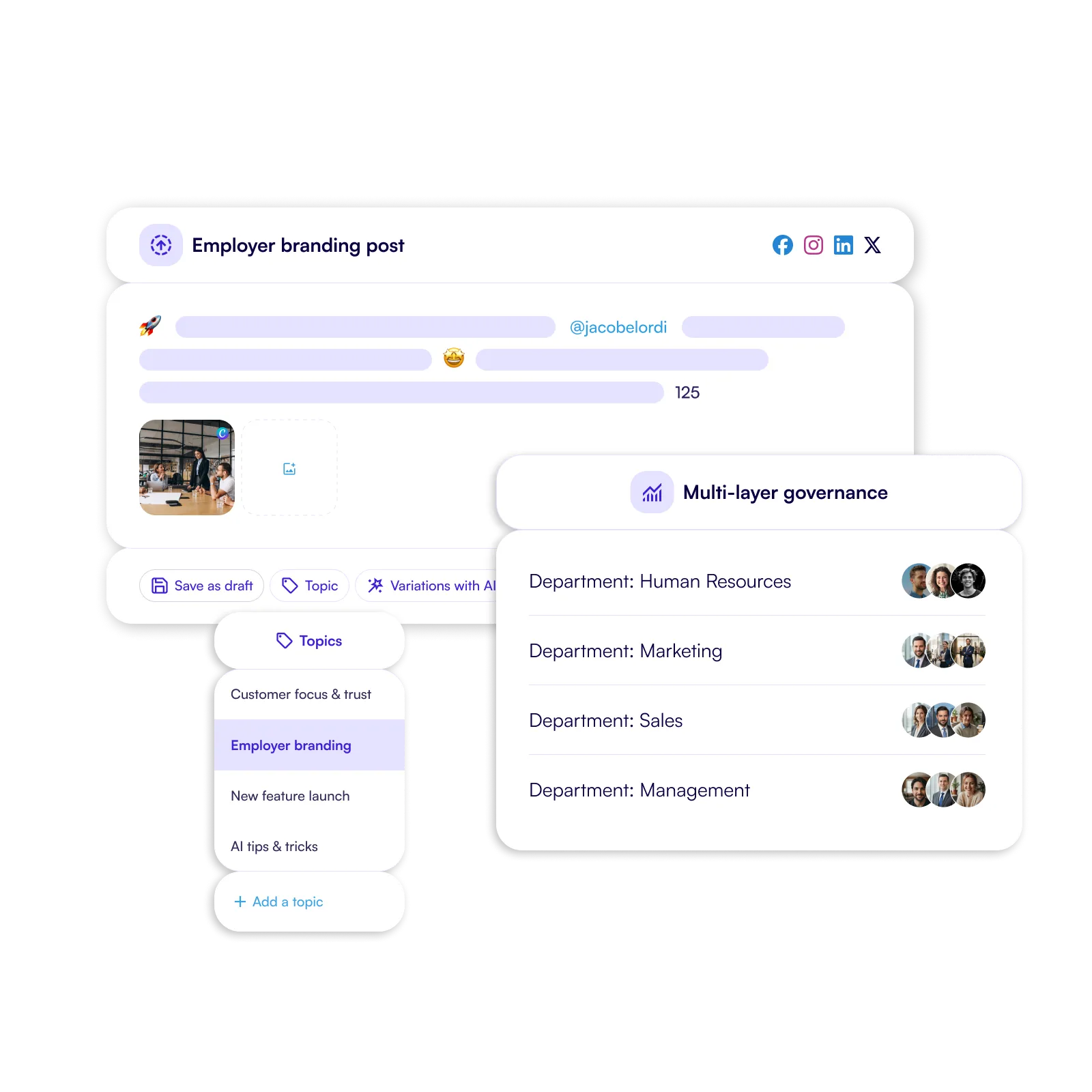
Create instant variations of a post with Ai.
Composer to create post variations and auto translate them into different languages.

Why this feature matters.

Without clear workflows, content creation either slows down or bypasses governance. Teams often rely on email, shared documents and scattered tools to coordinate content, which makes collaboration harder than it should be.

  • Email threads and shared documents being used to manage drafts and feedback.
  • Unclear responsibilities for reviewing and approving content.
  • Delays or inconsistent quality when processes are skipped.

Collaborative workflows bring structure to the process, helping teams work together while keeping quality and oversight intact.

Key capabilities.

Collaborative workflows help teams coordinate content creation, reviews and approvals in a clear and structured way.
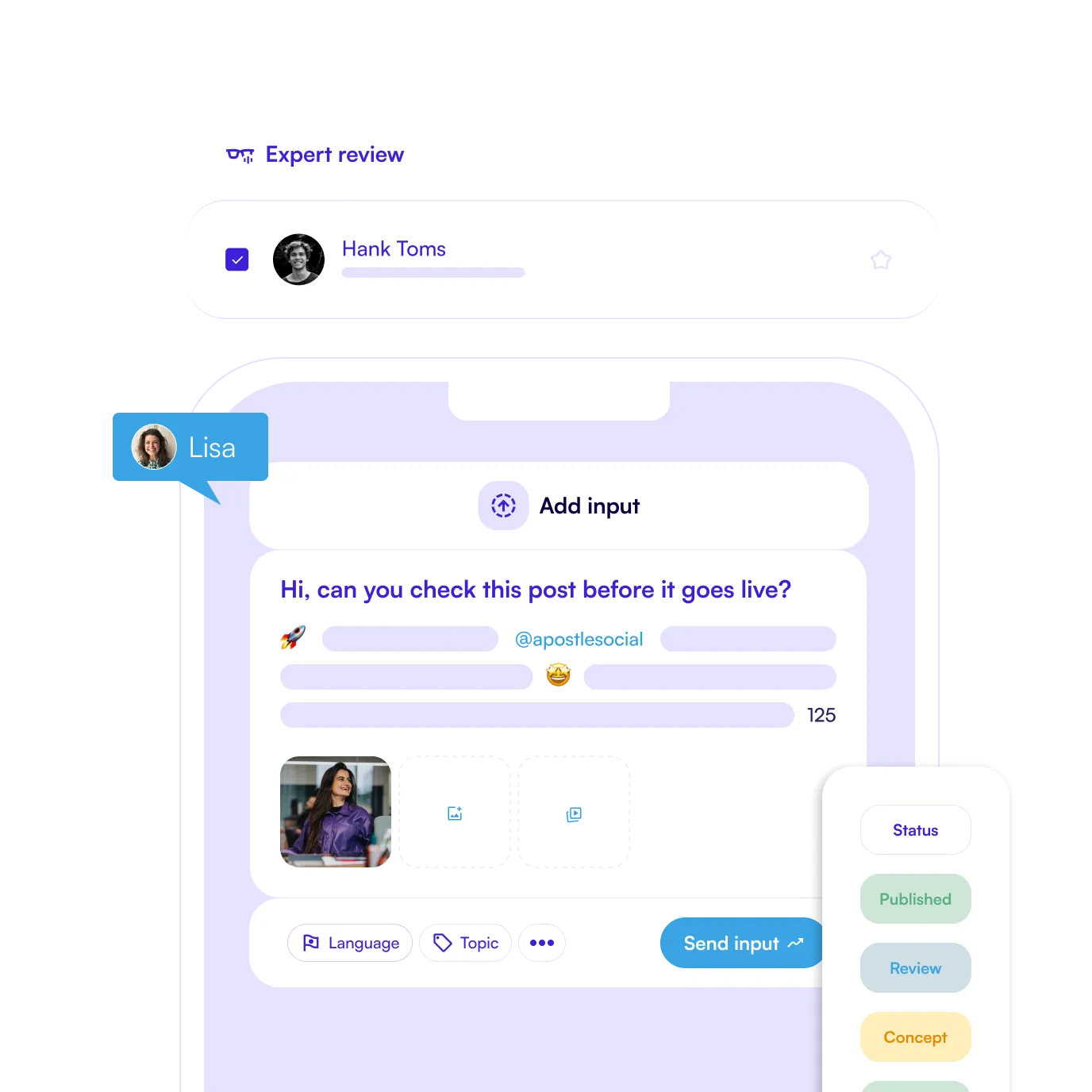
  • Manage drafts, expert reviews and approvals in one platform.
  • Define clear roles and responsibilities.
  • Segment content by team, region or user group.
  • Coordinate execution without manual handovers.
  • Maintain consistent quality across all content.
Generate variations of a post.
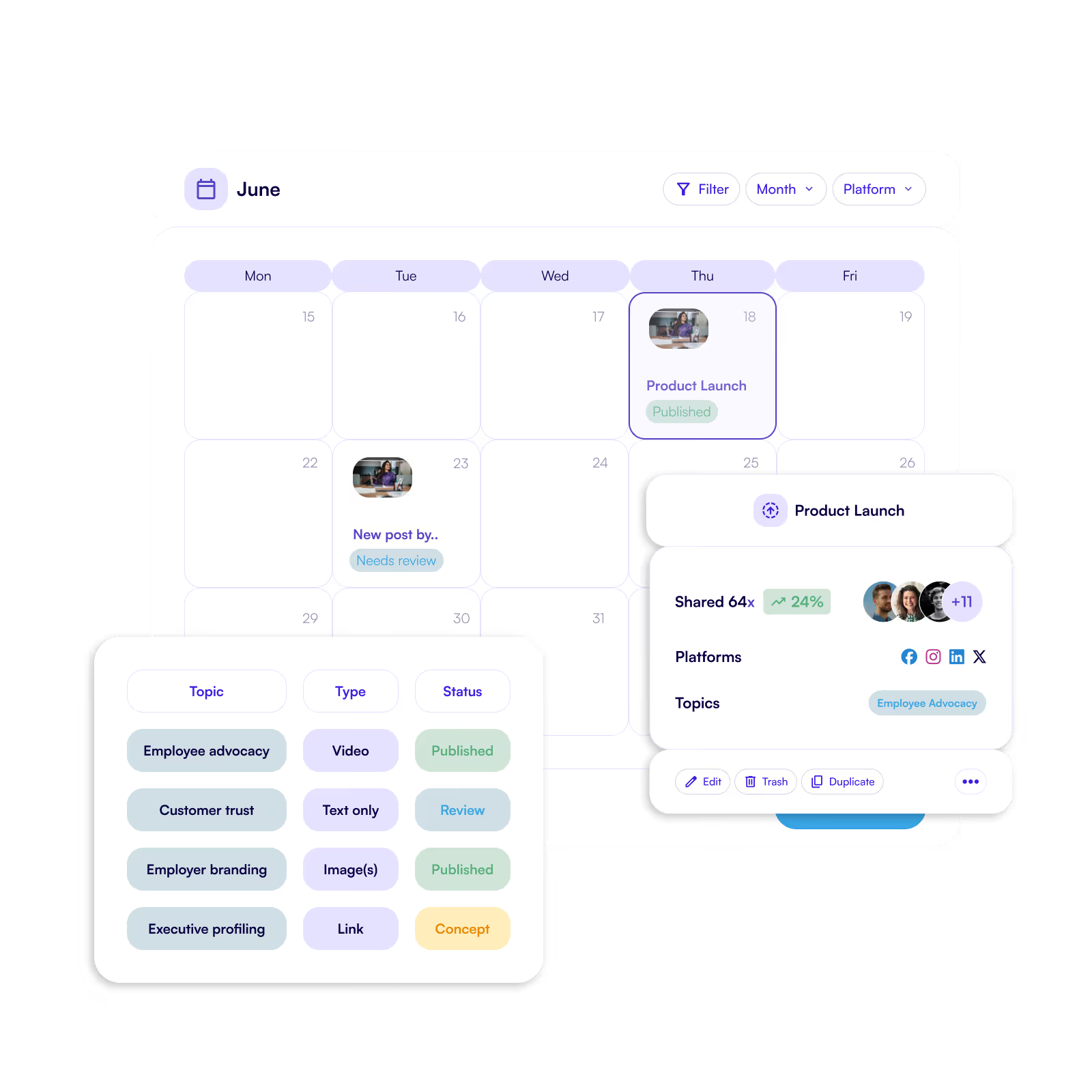
Content calender and themes to easily stay on top of content.

Built for organisations that operate at scale.

This feature helps organisations coordinate content creation across multiple teams and approval layers without losing clarity or control.

  • Marketing teams define workflows and approval steps.
  • Content moves smoothly from creation to activation without external tools or manual handovers.
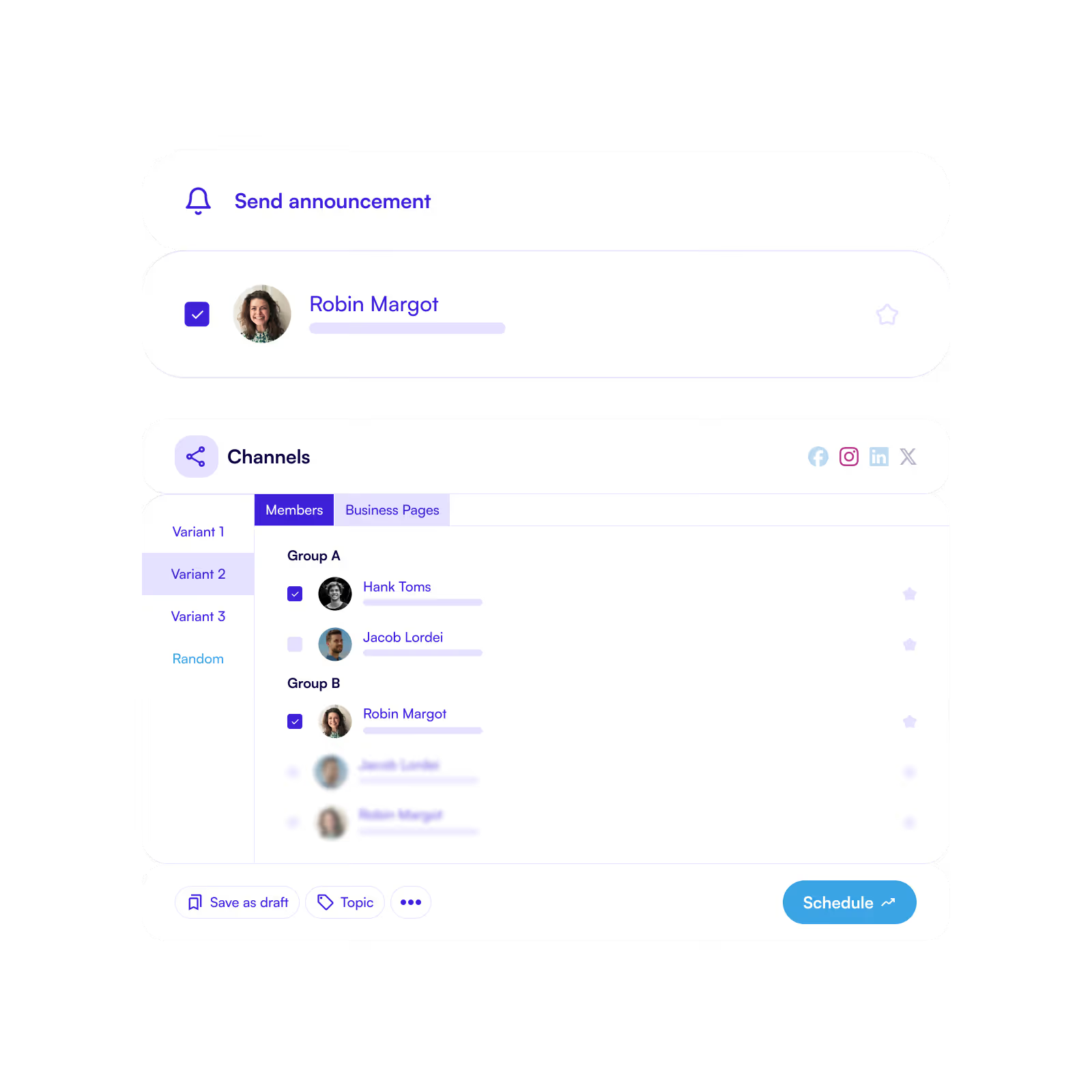
  • Teams can send announcements to users to share updates, instructions or campaign information.

Ready to explore the software and features?

$(document).ready(function() { // Only execute if the URL contains the Dutch slug '/nl' // if(window.location.href.indexOf('/nl') > -1) { // Check if the URL does not contain the word 'webinars' if(window.location.href.indexOf('webinars') === -1) { const modal = $('#webinar-modal'); function webModal(){ hasSeenBanner = getCookie("hasSeenWebinarBanner"); if (hasSeenBanner == "") { modal.addClass('active'); } } function closeModal(){ setCookie('hasSeenWebinarBanner', '1', '20'); modal.removeClass('active'); } $('#close-webinar-modal').click(function() { closeModal(); }); setTimeout(() => { webModal(); }, 15000); // Below you find three function for setting a cookie, getting a cookie and eventually checking whether the cookie exists function setCookie(cname, cvalue, exdays) { const d = new Date(); d.setTime(d.getTime() + (exdays*24*60*60*1000)); let expires = "expires="+ d.toUTCString(); document.cookie = cname + "=" + cvalue + ";" + expires + ";path=/"; } function getCookie(cname) { let name = cname + "="; let decodedCookie = decodeURIComponent(document.cookie); let ca = decodedCookie.split(';'); for(let i = 0; i #webinar-modal.active { z-index: 1000; opacity: 1; } #modal-wrapper { transition-property: opacity, z-index; transition-duration: 200ms, 0; transition-delay: 0, 200ms; } .geek-frame-holder { margin: 0 auto; }