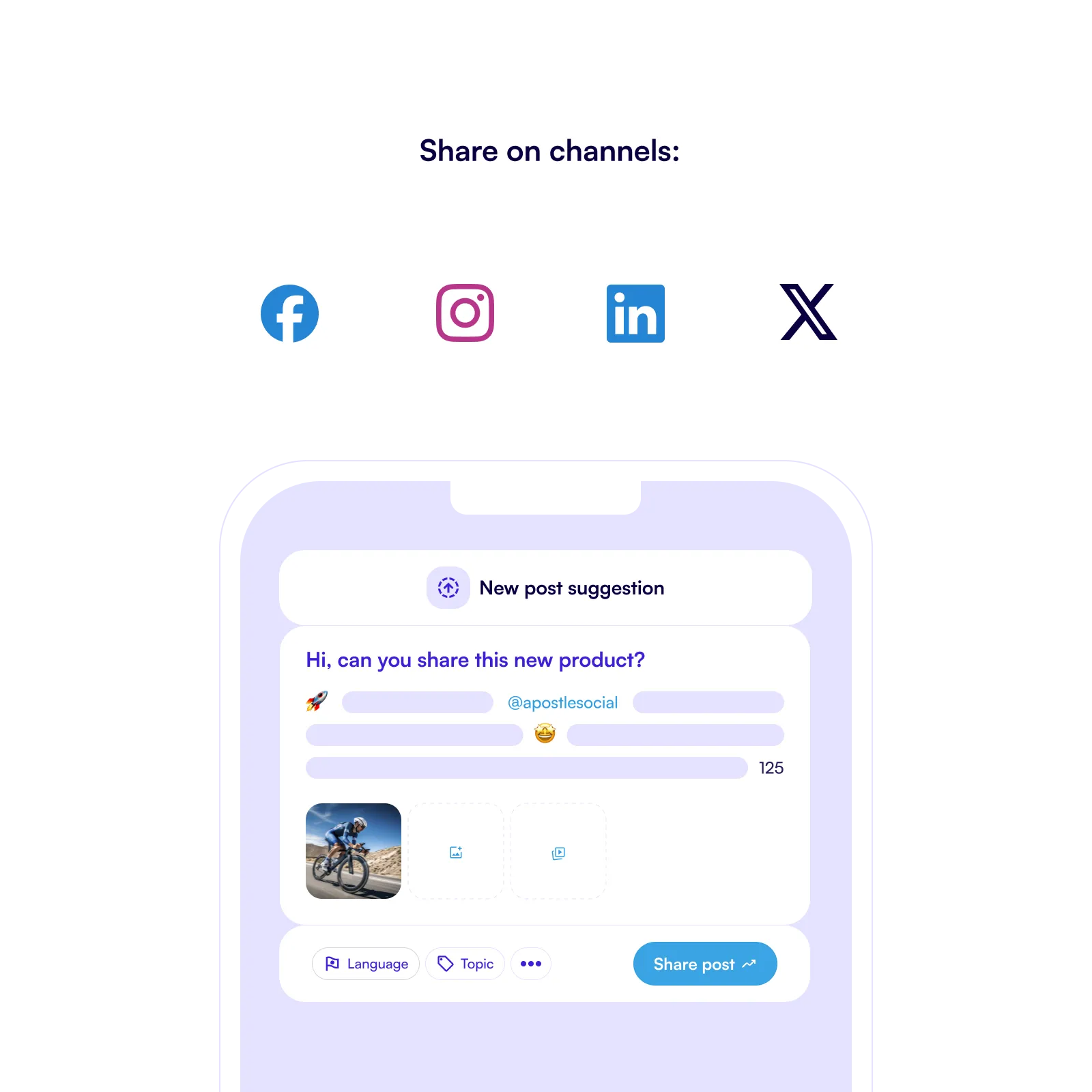
Personalised content suggestions

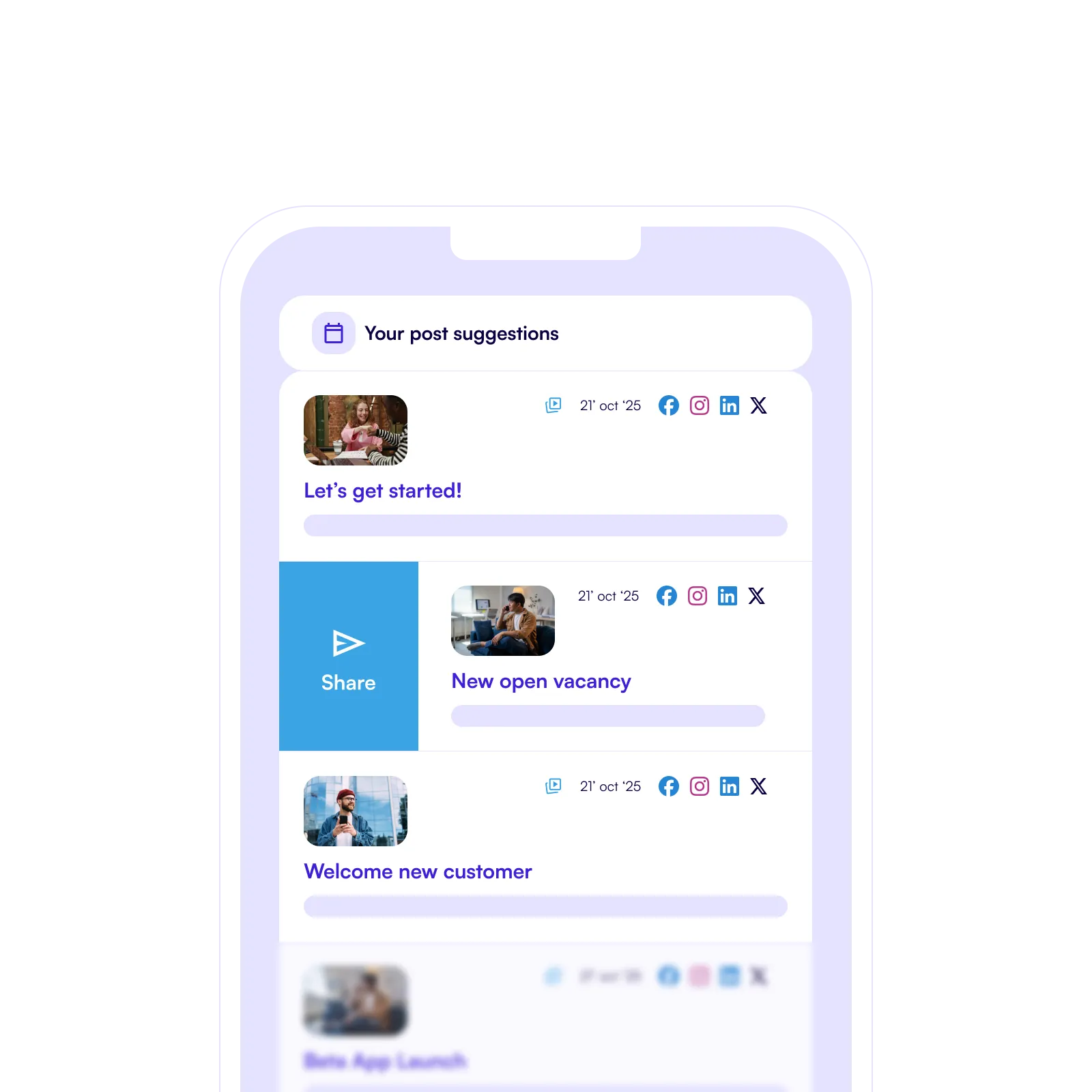
Suggest Personalised and Brand-Safe Posts for Users To Share

Activate employees, executives and partners with content that fits their role, audience and interests.
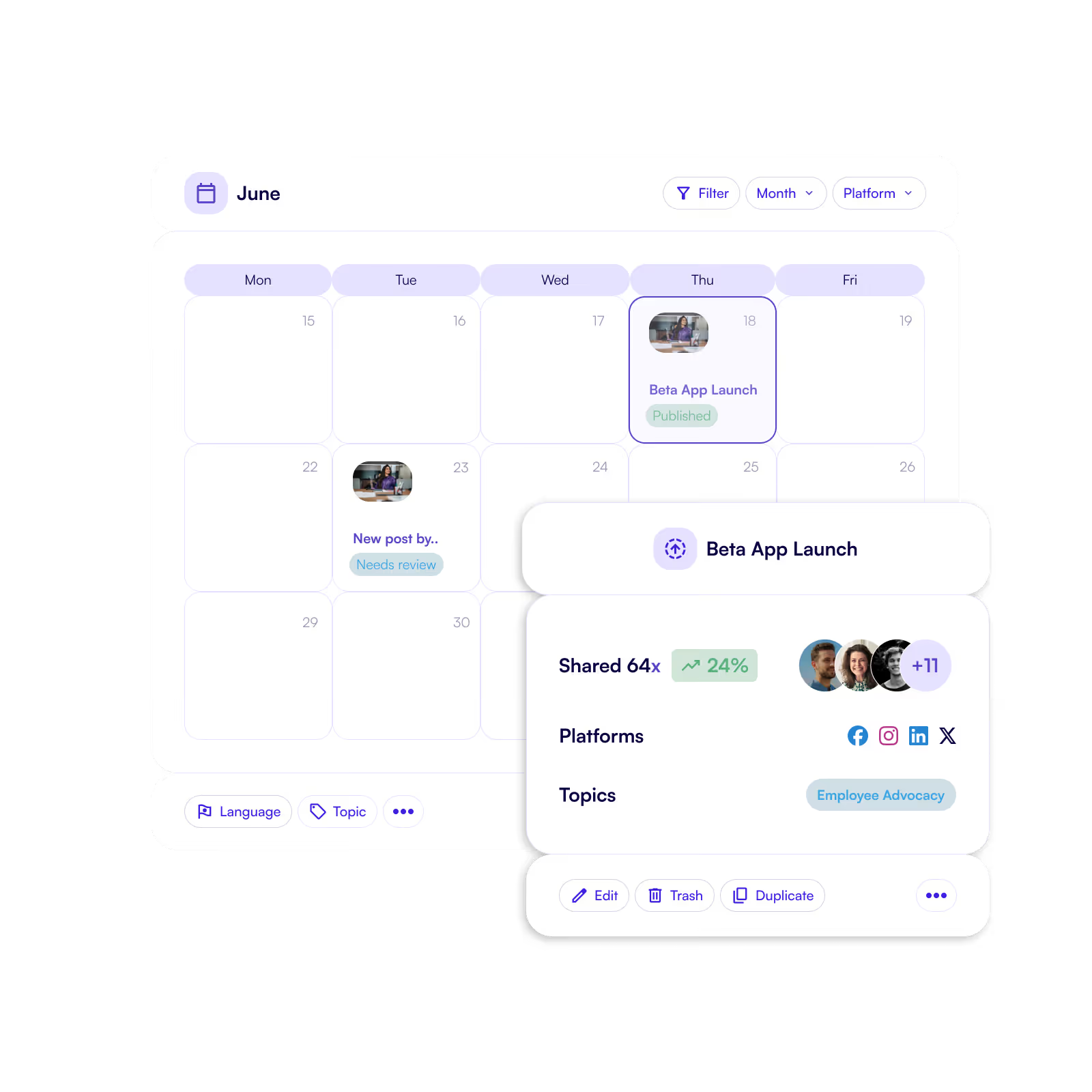
Content calendar with detailed view.
Composer to create posts and the ability to schedule for pages and persons.

Why this feature matters.

Employee participation often drops when sharing feels forced, irrelevant or risky.

  • People want autonomy over what they post, content that feels relevant to them, and confidence that what they share reflects well on both themselves and the organisation.
  • Personalised content suggestions ensure that content is always voluntary, tailored to the right audience and aligned with brand guidelines, without adding extra effort.
  • Personalised suggestions ensure enough variation, so people don’t all share the same post.

Key capabilities.

This feature helps organisations activate people in a way that feels natural, relevant and easy to participate in.
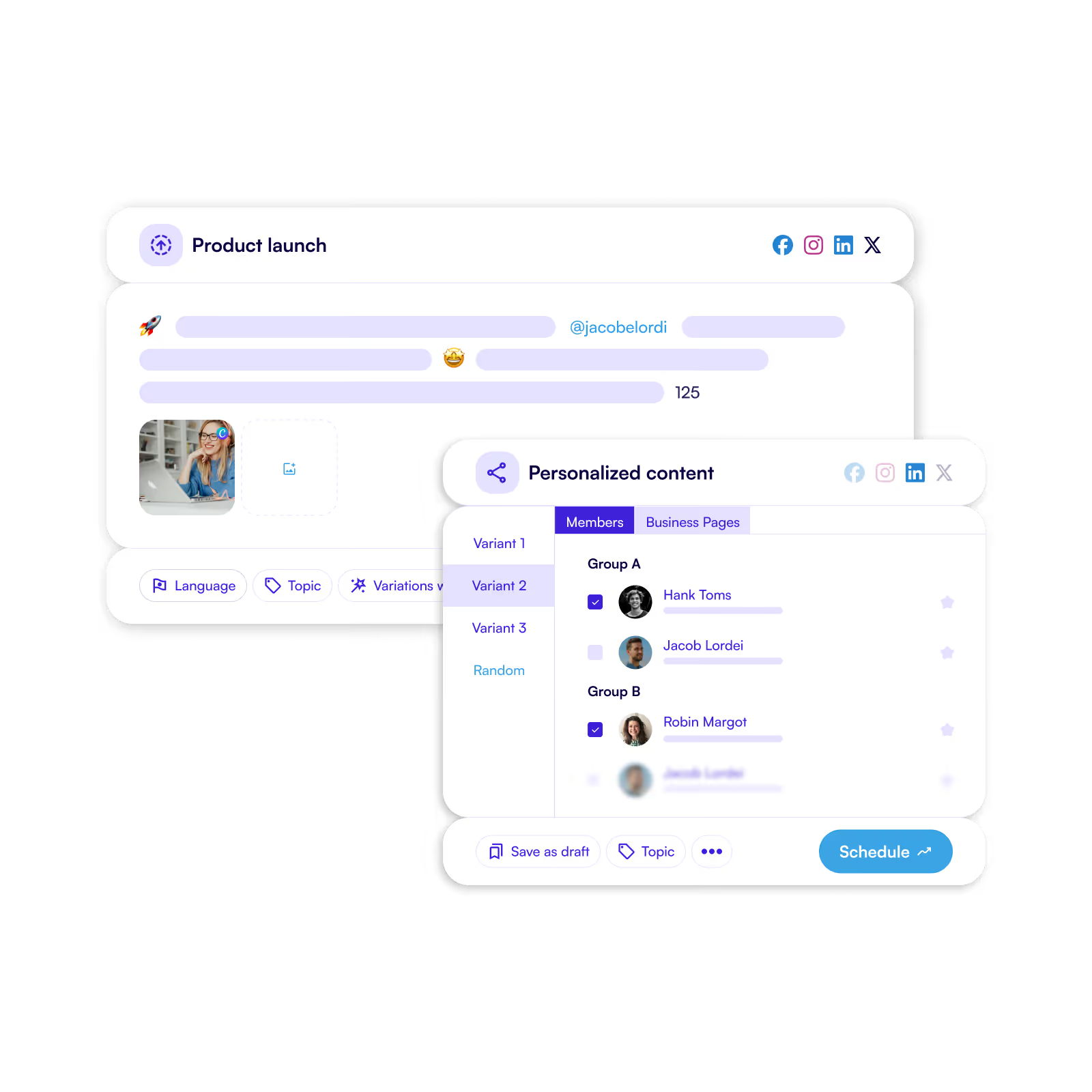
  • Personalised content per role, region or interest.
  • Voluntary sharing posts, never forced.
  • One-click sharing via app, email or intranet.
  • Brand-safe messaging with room for personal tone.
  • Higher adoption and more authentic reach.
Content calender and social media planning with subject, topics, types and status.
Mobile app to easily share posts.

Built for organisations that operate at scale.

Designed to keep content suggestions relevant and manageable, from small teams to large organisations and partner networks.

  • Marketing and communication teams plan content centrally.
  • Employees, executives, dealers and partners receive relevant suggestions.
  • Users decide if and how they share the content.

Ready to explore the software and features?

$(document).ready(function() { // Only execute if the URL contains the Dutch slug '/nl' // if(window.location.href.indexOf('/nl') > -1) { // Check if the URL does not contain the word 'webinars' if(window.location.href.indexOf('webinars') === -1) { const modal = $('#webinar-modal'); function webModal(){ hasSeenBanner = getCookie("hasSeenWebinarBanner"); if (hasSeenBanner == "") { modal.addClass('active'); } } function closeModal(){ setCookie('hasSeenWebinarBanner', '1', '20'); modal.removeClass('active'); } $('#close-webinar-modal').click(function() { closeModal(); }); setTimeout(() => { webModal(); }, 15000); // Below you find three function for setting a cookie, getting a cookie and eventually checking whether the cookie exists function setCookie(cname, cvalue, exdays) { const d = new Date(); d.setTime(d.getTime() + (exdays*24*60*60*1000)); let expires = "expires="+ d.toUTCString(); document.cookie = cname + "=" + cvalue + ";" + expires + ";path=/"; } function getCookie(cname) { let name = cname + "="; let decodedCookie = decodeURIComponent(document.cookie); let ca = decodedCookie.split(';'); for(let i = 0; i #webinar-modal.active { z-index: 1000; opacity: 1; } #modal-wrapper { transition-property: opacity, z-index; transition-duration: 200ms, 0; transition-delay: 0, 200ms; } .geek-frame-holder { margin: 0 auto; }